
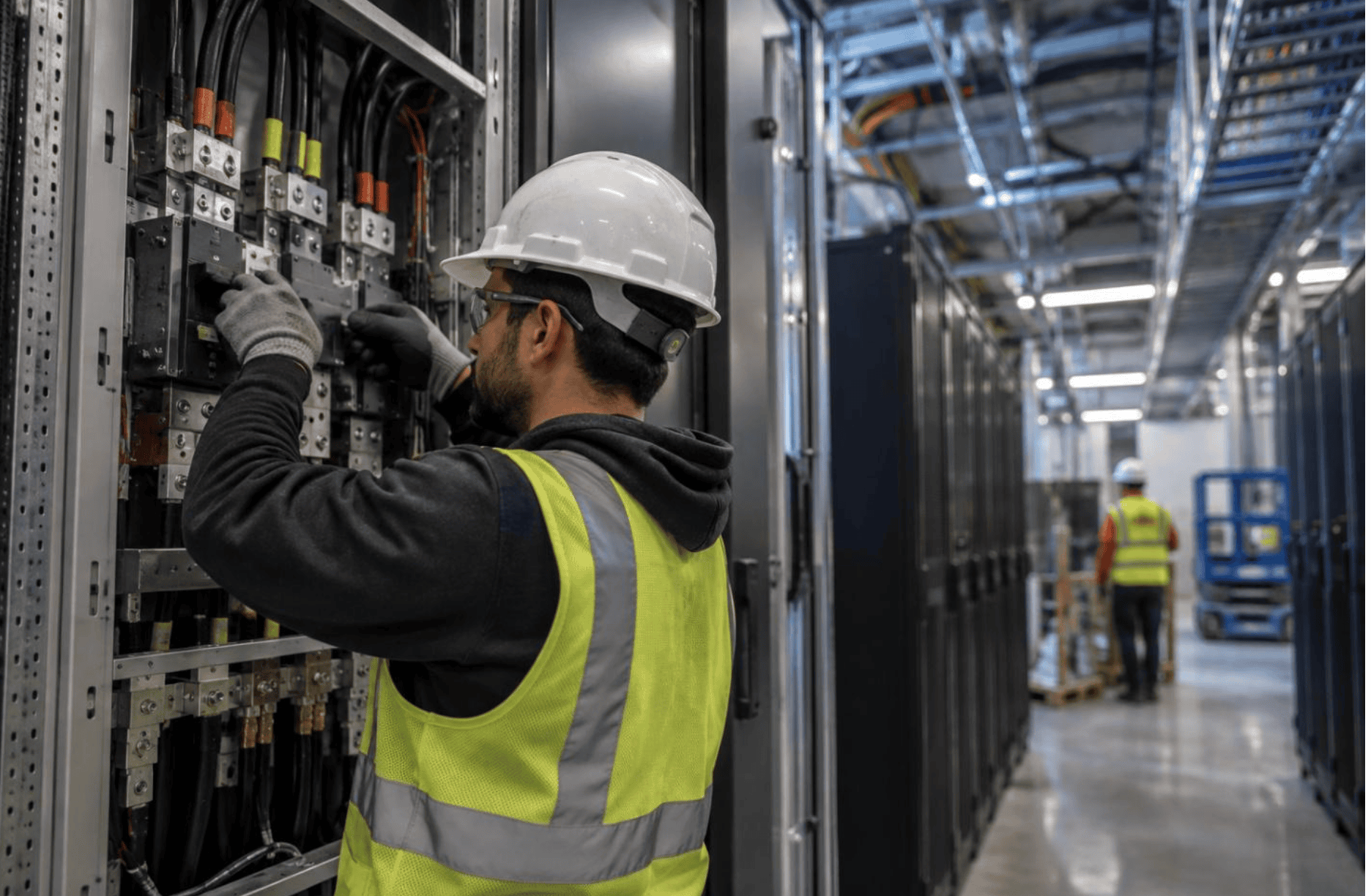

The AI Boom Is Also a Skilled Trades Workforce Story
Artificial intelligence may be changing how people work online, but the growth of AI is also creating major demand in the physical world. Behind every AI platform, cloud service and digital application is infrastructure that has to be built, powered, cooled and maintained.
As investment in data centers and supporting infrastructure continues to grow, so does the need for the skilled tradespeople who make those projects possible. Electricians, pipefitters, welders, equipment operators and other construction professionals are becoming an increasingly important part of the infrastructure supporting the digital economy.
For contractors, the AI boom isn't just a technology story. It's a workforce story.
AI Growth Requires Physical Infrastructure
When most people think about artificial intelligence, they think about software, computers and automation. What is easy to overlook is the enormous physical infrastructure required to operate those technologies.
Data centers house the servers and computing equipment that process and store massive amounts of information. Building and operating these facilities requires sophisticated electrical systems, cooling infrastructure, backup power, mechanical systems and connections to the electrical grid.
And none of that gets built without skilled people.
As AI applications continue to expand, companies are investing in new data centers and infrastructure across the United States. That construction creates demand for a wide range of skilled trades, including:
Technology may be driving the investment, but skilled trades are responsible for turning that investment into functioning infrastructure.
Electricians Are Becoming Even More Important to AI Infrastructure
Electrical work is one of the clearest examples of how technology growth is affecting the construction workforce.
The U.S. Bureau of Labor Statistics projects employment of electricians to grow 9% from 2025 to 2035, much faster than the average for all occupations.
Source attribution: U.S. Bureau of Labor Statistics.Approximately 72,700 electrician openings are projected each year during that period.
The BLS specifically points to the increasing use of artificial intelligence and demand for data centers as factors expected to increase electricity demand. Expanding and upgrading the nation's power infrastructure will require electricians to install and connect new electrical systems and power-generation sources.
That means the growth of AI isn't eliminating the need for skilled trades. In many areas, it's doing the opposite.
The AI Boom Is Adding to an Already Competitive Labor Market
The challenge for contractors is that demand for qualified craft professionals was already strong before the latest wave of data-center development.
Data centers are now competing for many of the same electricians and skilled professionals needed for commercial construction, manufacturing, renewable energy, industrial projects and infrastructure development.
According to a 2026 workforce survey from the Associated General Contractors of America and NCCER, 58% of contractors involved in data-center construction reported that those projects have increased competition for skilled workers.
Source attribution: 2026 workforce survey from the Associated General Contractors of America and NCCER.That competition can create challenges for contractors trying to maintain adequate manpower while meeting aggressive construction schedules.
Finding workers is one challenge. Finding workers with the right experience, qualifications and jobsite readiness is another.
Planning for Changing Skilled Labor Needs?
Quality Labor Management (QLM) works with contractors across the labor and workforce sector to help align skilled workforce solutions with project demands, schedules and manpower requirements.
Explore QLM Labor & Workforce Solutions Contact QLMTechnology Changes. The Need for Skilled People Doesn't.
Automation and AI are often discussed in terms of the jobs technology could replace. Construction provides another side of that conversation.
Someone still has to install electrical systems.
Someone still has to run conduit, install piping, operate equipment, complete mechanical work, troubleshoot systems and safely perform the physical work required to build increasingly complex facilities.
In fact, the more advanced our infrastructure becomes, the more important specialized skills can become.
That creates opportunities for experienced tradespeople while also reinforcing the importance of apprenticeships, training and developing the next generation of skilled workers.
What does this mean for the skilled trades?
AI and digital technology still depend on physical systems. Those systems require people with the technical skills to construct, install, operate, maintain and troubleshoot them. The digital economy and the skilled trades are therefore not separate stories: increasingly, they are connected parts of the same infrastructure ecosystem.
Workforce Planning Is Becoming Part of Project Planning
As major projects compete for a limited pool of qualified workers, contractors cannot always afford to wait until a project is underway to think about manpower.
Workforce planning should begin alongside scheduling, procurement and other critical components of preconstruction.
Contractors should consider questions such as:
Answering these questions early can help contractors prepare for changing manpower needs instead of reacting to shortages after they begin affecting the schedule.
This is where Labor Management becomes part of broader project strategy. A contractor may understand its construction schedule, materials and equipment needs, but the schedule ultimately depends on having qualified people available when specific phases of work begin.
Skilled Workforce Needs Go Beyond Headcount
In a competitive labor environment, workforce planning should not focus exclusively on the number of people available. Contractors also have to consider whether Team Members have the skills, qualifications, experience and jobsite readiness required for the work being performed.
At Quality Labor Management, QLM's approach centers on Safety, Productivity, and Quality (SPQ). These principles reflect the reality that successful Labor Management involves more than placing a person on a jobsite.
Contractors need Team Members who can contribute to the work while operating within the expectations, safety requirements and performance standards of the project.
As infrastructure becomes more sophisticated and project schedules become increasingly demanding, matching workforce capabilities with project requirements can become an important part of keeping work moving forward.
The Skilled Trades Are Building What's Next
Artificial intelligence may represent the future of technology, but that future still depends on people who know how to build.
From data centers and power infrastructure to advanced manufacturing and renewable energy, many of America's fastest-growing investments rely on skilled tradespeople to become reality.
The tools and technology may continue to evolve. The importance of having safe, productive and qualified professionals on the jobsite will remain.
At Quality Labor Management (QLM), we understand that successful projects require more than simply filling positions. We work with contractors to provide skilled workforce solutions that align with project demands, schedules and workforce needs.
As America's infrastructure evolves, QLM is ready to help provide the skilled professionals who keep projects moving forward.
Frequently Asked Questions About AI and Skilled Trades
Why is AI increasing demand for skilled trades?
Artificial intelligence depends on physical infrastructure such as data centers, electrical systems, cooling equipment, mechanical systems, backup power and grid connections. Building and maintaining that infrastructure requires electricians, pipefitters, welders, plumbers, HVAC professionals, equipment operators and other skilled construction professionals.
What skilled trades are needed for data center construction?
Data center construction can require electricians, pipefitters, welders, plumbers, HVAC and mechanical professionals, equipment operators, carpenters, construction laborers and safety professionals. Specific workforce requirements depend on the facility, construction phase and scope of work.
Why are electricians important to AI infrastructure?
Data centers require extensive electrical infrastructure to power servers, cooling systems, backup systems and other equipment. Electricians are needed to install, connect, expand and maintain the electrical systems and supporting power infrastructure required by these facilities.
Is AI replacing skilled trade jobs?
AI can change how certain tasks and processes are performed, but AI infrastructure itself still requires extensive physical construction. Electrical work, piping, welding, mechanical installation, equipment operation and other jobsite activities continue to require skilled professionals. Growth in data-center and supporting infrastructure development can therefore create additional demand for certain trades.
How is data center construction affecting the skilled labor market?
Data center projects compete for many of the same qualified craft professionals needed by commercial construction, manufacturing, industrial projects, renewable energy and broader infrastructure development. According to a 2026 workforce survey from the Associated General Contractors of America and NCCER, 58% of contractors involved in data-center construction reported that those projects have increased competition for skilled workers.
Why should workforce planning begin before construction starts?
Early workforce planning helps contractors identify which trades will be required, when manpower needs may increase and which qualifications or experience may be difficult to secure. Planning ahead can help contractors prepare for labor requirements before workforce shortages begin affecting project execution or scheduling.
What does SPQ mean at Quality Labor Management?
SPQ stands for Safety, Productivity, and Quality. These principles are central to how Quality Labor Management approaches workforce solutions and the expectations surrounding Team Members supporting contractor projects.
How can QLM support contractors with skilled labor needs?
Quality Labor Management works with contractors to provide skilled workforce solutions aligned with project demands, schedules and workforce needs. Contractors can learn more about QLM's labor and workforce solutions or contact QLM to discuss project needs.
Building What's Next? Let QLM Help Build Your Workforce.
Whether your project involves data centers, industrial construction, infrastructure or other skilled-trade requirements, Quality Labor Management can help you prepare for changing workforce demands with an approach centered on Safety, Productivity, and Quality.
Talk to QLM About Your Workforce Needs Explore Labor & Workforce Solutions